4.9 on Google (405) 242-3342 Request Service
Residential Electrical Service

Outlet and light switch installation in Oklahoma City.

Power where you actually need it and switches that do what you want - added, moved, and upgraded by licensed electricians who mark every location with you first.

Floor outlet installed in marble flooring in an Oklahoma City home
Overview

Small devices, real electrical work.

Outlet and switch installation in Oklahoma City covers a wider range than most people expect. It's adding an electrical outlet where the furniture actually sits, extending a circuit to a wall that never had one, relocating a receptacle after a remodel, converting ungrounded two-prong devices safely, and putting GFCI outlet installation where code now requires it. On the switch side, it's light switch replacement, dimmers matched to LED fixtures, three-way switching at both ends of a hall, separate control for a fan and its light, and timers or occupancy sensors where they earn their keep.

The people who call us for this are rarely in an emergency. They're homeowners in houses built when two receptacles per room was the standard, families setting up a home office or a nursery, and anyone tired of a power strip being the permanent solution behind the couch. Builders call us for it too, during trim-out and punch list.

It matters because these are the parts of the system you touch every day, and they're also where quiet risk accumulates. A receptacle whose contacts have gone loose after forty years heats up. A device wired through its push-in back holes rather than its screw terminals works right up until it doesn't. Doing this work properly is unglamorous, and it's exactly the kind of thing we won't cut a corner on.


Benefits

What changes after we leave.

1

The extension cords come out of service

Cords under rugs, daisy-chained power strips, and a splitter feeding a space heater are where a surprising share of household electrical risk actually lives. Putting receptacles where the load is retires all of it permanently.

2

Outlets that aren't behind the couch

We mark heights and locations with you before drilling, accounting for the headboard, the console, the countertop backsplash, and the desk you already own. It's a five-minute conversation that prevents a receptacle you can never reach again.

3

GFCI protection in the places that protect people

Kitchen counters, bathrooms, the garage, the laundry, and every exterior receptacle. These devices are designed to interrupt a fault fast enough to matter to a person, not just to equipment - and older homes are almost always short a few.

4

Switching that finally makes sense

Three-way control at both ends of the hallway, the fan and its light on separate switches, an LED-compatible dimmer that doesn't flicker or hum, and a timer on the bathroom fan. Small changes you notice every single day.

Signs you need this

Worth putting on the list.

Any of these are a good reason to have an electrician add or replace devices:

  • A plug falls out of the outlet or hangs loose - the internal contacts are worn out
  • An outlet, plate, or plug feels warm, looks discolored, or sparks when you plug something in
  • No test and reset buttons on the receptacles by the kitchen sink, in the bathroom, or in the garage
  • Two-prong outlets you're working around with cheater adapters
  • You unplug one thing every time you need to plug in another
  • A power strip has become permanent furniture in a room
  • No exterior receptacle, so holiday lights or the pressure washer run on a cord out a window
  • A switch that doesn't appear to control anything, or an outlet only half of which works
  • Dimmers that buzz, or LED bulbs that flicker or won't dim smoothly
  • Devices painted over, cracked, or loose in the wall
  • A new appliance, treadmill, or window unit that needs its own dedicated circuit
  • Small children in the house and no tamper-resistant receptacles
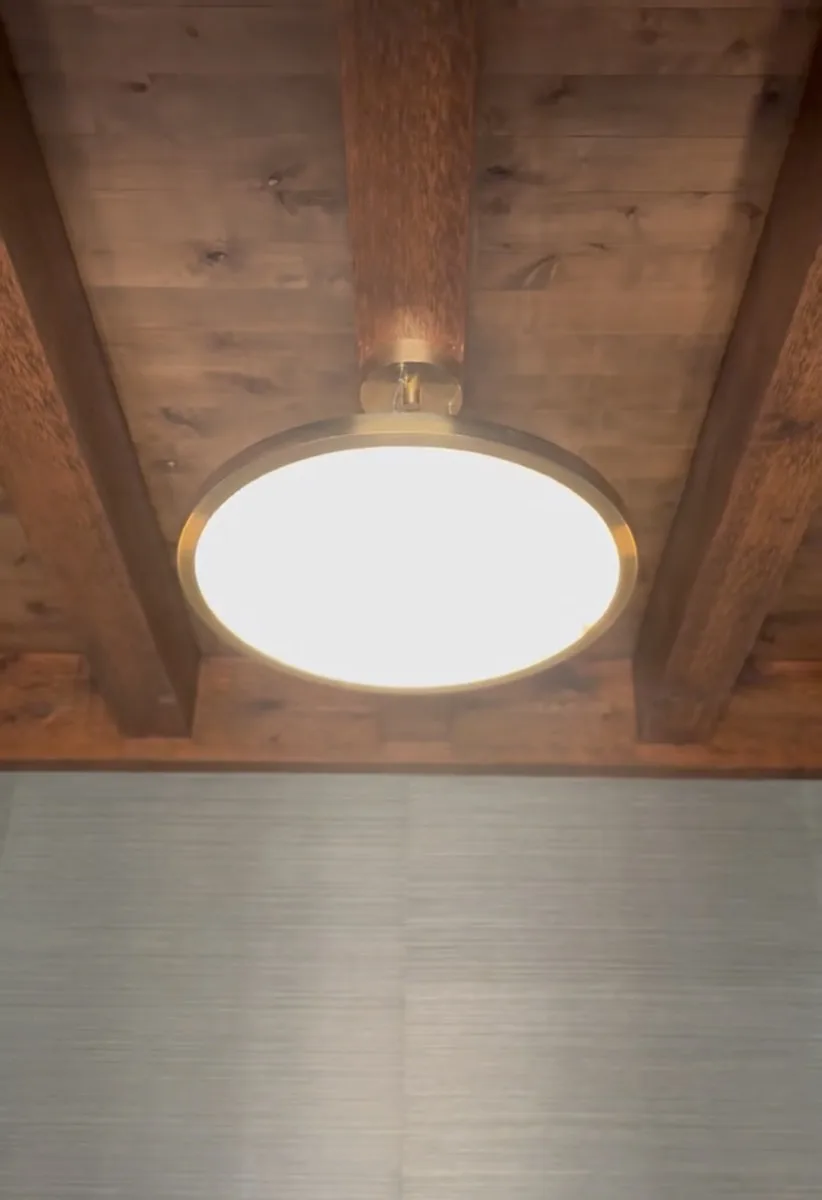
Round brass flush-mount light fixture on a wood beam ceiling in an Oklahoma City home
Pricing guidance

What makes one outlet cost more than another.

"How much for an outlet?" is a fair question, and the honest answer is that it depends almost entirely on what sits between the new box and the power.

  • Extending an existing circuit versus running a new one. Picking up power from a nearby receptacle is a different job than pulling a new home run all the way back to the panel. And if a dedicated circuit is needed but the panel has no open spaces or no capacity left, that's a bigger conversation - one we'd rather have up front than surprise you with.
  • The path the cable has to take. Attic or crawl space access above or below the wall keeps it simple. Fire blocking, insulation, masonry exteriors, a finished ceiling below, or a slab foundation with no route underneath all add real time. If access openings are needed, we're clear in advance about whether the patching is in our scope or yours.
  • Finished walls versus open framing. During a remodel with the studs exposed, devices are dramatically cheaper to add. That's why we always ask what else you're planning.
  • Device type and code-triggered work. A standard receptacle, a GFCI, a USB-integrated outlet, a smart switch, and a weather-resistant exterior device with an in-use cover differ meaningfully in material cost. Extending a circuit in certain rooms also brings arc-fault protection into scope, and tamper-resistant receptacles are now standard in living spaces.
  • How many at once. Batching eight small items into one visit costs far less per item than eight separate trips, because setup and travel are a real part of any service call.

You'll get a price before we start cutting, not after. Consultations are free, and larger projects can be financed through Wisetack on approved credit. See financing details.

FAQ

Outlet and switch questions.

Can you add an outlet without tearing up my wall?

In most cases yes. When there is attic or crawl space access above or below the wall, we can fish the new cable in and cut only the box opening itself. Interior walls with fire blocking, brick exteriors, or a finished room below can require a small access hole or two. We tell you where those will fall before we start drilling, not after.

Which outlets in my house are required to be GFCI?

Generally the ones near water or outside the conditioned space - kitchen countertops, bathrooms, laundry areas, garages, unfinished basements and crawl spaces, and all exterior receptacles. Requirements have expanded over the years, so an older home is usually short several. We check the whole house while we are there and tell you which ones are missing.

Why does my LED bulb flicker or buzz on a dimmer?

Almost always because the dimmer and the bulb are not matched. Many dimmers still in service were designed for incandescent loads and have a minimum wattage far above what an LED draws. We match an LED-compatible dimmer to the fixtures you actually have, which resolves most flicker and hum without changing the bulbs you like.

Can you convert my two-prong outlets to three-prong?

Yes, but only correctly. Simply putting a three-prong receptacle on an ungrounded circuit is unsafe and gives you a false sense of protection. The right fix is either running a proper equipment ground or installing GFCI protection with the required labeling. We will walk you through which one fits your home. More on rewiring.

Do I need a new circuit or can the outlet share an existing one?

It depends on what is already on that circuit and what you plan to plug in. A lamp and a phone charger can usually share. A window unit, a space heater, a treadmill, or a shop tool should have its own circuit. We check what the nearby circuit is carrying before we extend it rather than assuming it has room.

Can you install smart switches and USB receptacles?

Yes. One thing worth knowing up front: most smart switches need a neutral conductor in the switch box, and many older homes were wired without one. We check the box before you buy anything, and if the neutral is not there we explain the options instead of leaving you with a switch that will not work. More on smart home wiring.

Related services

Other work in the same visit.

Got a list? One visit usually covers it.

A worn receptacle that heats up under load or a device wired through its push-in holes isn't urgent right up until it is - and these are among the least expensive problems in a house to fix properly. If you're planning holiday lighting, a home office, or a nursery, getting the outlets in before you need them beats working around them for another season.

Send us the whole list and we'll knock it out in one trip. If anything isn't right afterward, Grider always makes it right. Grider Electric is licensed and insured, based in north Oklahoma City, and works on homes and new construction only - serving Oklahoma City, Edmond, Arcadia, Guthrie, Yukon, Moore, Norman, Mustang, Piedmont, Bethany, The Village, Nichols Hills, and the Deer Creek area.

← All services