4.9 on Google (405) 242-3342 Request Service
Residential Electrical Service

Whole-home rewiring and old wiring replacement in Oklahoma City.

When a house is still running on wiring that predates modern living, we replace it - phased room by room, planned around your family, and finished to current code.

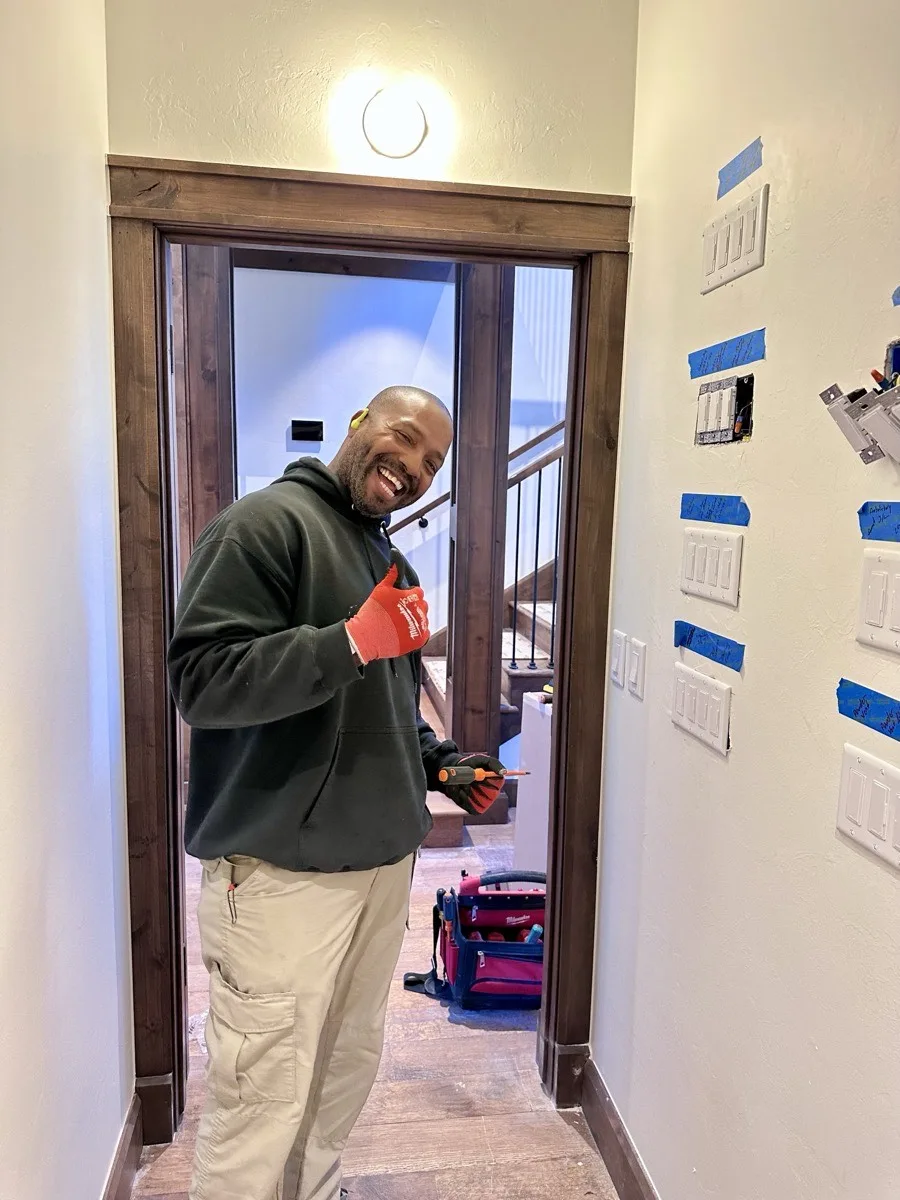
Grider Electric electrician running new residential wiring
Overview

What house rewiring means in an older OKC home.

Whole-home rewiring in Oklahoma City means replacing the branch circuit wiring that runs from your panel out to every light, switch, and receptacle in the house. New cable, new boxes, a real equipment ground on every circuit, and dedicated circuits for the loads that deserve their own - kitchen counters, laundry, bathrooms, and HVAC equipment.

The homes that need electrical rewiring in this metro are mostly the ones with good bones and old bones at the same time. Knob-and-tube replacement comes up in the oldest housing stock. Aluminum branch wiring shows up in houses built in the late 1960s and early 1970s. Cloth and rubber insulated cable turns brittle and crumbles at the boxes. And plenty of homes simply have two-prong ungrounded outlets in every room because that was the standard when they were built.

It matters because old wiring doesn't fail all at once. Insulation dries out, terminations loosen from decades of heating and cooling, and circuits that were sized for a lamp and a radio now carry a home office. A rewire is the one fix that resets the entire system instead of chasing symptoms room by room.

Benefits

What you get back for the disruption.

1

A real equipment ground in every room

Ungrounded two-prong circuits mean the surge protector behind your TV has nowhere to send a surge, and cheater plugs are doing nothing but hiding the problem. Grounded circuits are what let the protective devices in your home and in your electronics actually work.

2

Dedicated circuits where old houses never had them

A rewire is when the kitchen counters, the microwave, the laundry, the bathrooms, and the HVAC equipment finally get their own circuits. That's what ends the routine of tripping a breaker because the coffee maker and the toaster ran at once.

3

The one moment to add what the walls wouldn't allow

While the cable is being pulled anyway, recessed lighting, fan-rated boxes on the ceilings, exterior outlets, garage circuits, and low-voltage runs cost far less to add than they ever will again. Skipping this step is the regret we hear most.

4

The actual failure points are gone, not managed

Brittle insulation that flakes off at the box, aluminum terminations that loosen and overheat, splices buried in walls with no junction box - a rewire removes those conditions rather than working around them for another decade.

Signs you need this

When old wiring is telling you something.

Rewiring is a real project, so it's worth knowing what actually points to it:

  • Two-prong ungrounded outlets through most of the house
  • Ceramic knobs and porcelain tubes visible in the attic - classic knob-and-tube
  • Cloth-wrapped or rubber-insulated cable that's stiff, cracked, or crumbling at the boxes
  • "AL" or "ALUMINUM" stamped on the cable jacket at the panel
  • Switch and outlet plates that feel warm, or are discolored around the screws
  • Breakers tripping across several unrelated rooms, not just one circuit
  • Extension cords and power strips doing permanent duty in every room
  • Splices found in a wall or attic with no junction box around them
  • You're renovating and the walls or ceilings are already open
  • Your insurance carrier asked for documentation about the wiring type

If you're seeing scorching at a device or smelling burning insulation, turn that circuit off at the panel and call us before anything else.

Ka'ron, journeyman electrician at Grider Electric, on a job in Arcadia, OK
Pricing guidance

What makes one rewire cost more than another.

Rewiring prices are driven far more by access and scope than by square footage alone. Here's what genuinely moves the cost:

  • How much of the house is in scope. Rewiring the original 1940s core while leaving a newer addition alone is a different job than taking on every circuit in the building. Every receptacle, switch, and fixture is also a termination, and adding circuits the house never had - as most rewires do - increases both the material and the panel work.
  • Access, wall construction, and whether you're living there. A walkable attic and an open crawl space make cable runs straightforward, while slab-on-grade homes with low or no attic clearance over key rooms take significantly more labor for the same result. Lath and plaster is slower and less forgiving to open than drywall, and working around a family in the home takes phasing and protection an empty house doesn't require.
  • What's already in the walls. Knob-and-tube demands careful handling, and aluminum branch wiring can sometimes be remediated at the terminations instead of fully replaced - a genuinely different scope.
  • Code-triggered work and the panel. A rewire brings arc-fault protection, tamper-resistant receptacles, GFCI locations, and interconnected smoke and CO alarms into scope - required work, not upselling. New circuits also need somewhere to land, and if the service needs upgrading too, planning both together costs less than doing them as separate projects.
  • Patch, texture, and paint. Whether we coordinate the finish repairs or you handle them changes the total meaningfully, and we're clear about that line up front.

Every rewire starts with a free consultation and a written scope, and we offer financing through Wisetack on approved credit. See financing details.

FAQ

Rewiring questions, answered straight.

Do I have to move out while my house is rewired?

Usually not. We phase the work so most of the house keeps power while we are in one area at a time. Some days are noisier and dustier than others, and we tell you which rooms are affected before each phase so you can plan around it.

How much of my drywall or plaster has to come out?

Less than most people expect. Wherever we can, new cable is routed through the attic, crawl space, or basement and dropped into walls, which limits us to small access openings near boxes and fish points. Homes on a slab with no attic access above a given room need more openings. We show you the expected access points before we start and put the patching plan in writing.

Can you rewire just part of the house?

Yes. Partial rewires are common - the kitchen, the original section of an older home, or every ungrounded circuit while newer additions stay as they are. We will tell you plainly when a partial rewire genuinely solves the problem and when it just moves it down the wall.

Does aluminum branch wiring always have to be replaced?

No. Some homes are served well by remediating the terminations with listed connectors at every device and junction, which is far less invasive. Full replacement makes more sense when the wiring is damaged, the walls are already open, or the home needs added circuits anyway. We explain both options and what each one does and does not fix.

Do I need a panel upgrade with a rewire?

Often, yes. A rewire typically adds circuits, and the existing panel frequently has neither the spaces nor the amperage to carry them. We evaluate the service during the assessment so the panel and the branch wiring are planned together rather than paid for twice. More on panel upgrades.

How long does a whole-home rewire take?

It is measured in days rather than hours, and the size of the home, the access, and whether you are living in it during the work all change the schedule. You get a written schedule with the plan, along with which rooms are affected in which phase.

Related services

Work that goes hand in hand with a rewire.

Let's find out what's actually in your walls.

Old wiring is the rare problem that gets worse purely with time - insulation keeps drying, terminations keep loosening, and none of it improves while you wait. If you're already remodeling, the walls being open is the cheapest opportunity you'll ever have to fix it, and that window closes the day the drywall goes up.

Start with a free assessment and an honest answer about whether you need a full rewire, a partial one, or something smaller. And if anything isn't right after we finish, Grider always makes it right. Grider Electric is licensed and insured, based in north Oklahoma City, and works on homes and new construction only - serving Oklahoma City, Edmond, Arcadia, Guthrie, Yukon, Moore, Norman, Mustang, Piedmont, Bethany, The Village, Nichols Hills, and the Deer Creek area.

← All services