4.9 on Google (405) 242-3342 Request Service
Residential Electrical Service

Lighting installation and design for Oklahoma City homes.

We plan the layout, wire the circuits, and hang the fixtures - so a room is lit the way it was meant to be, not just brightened.

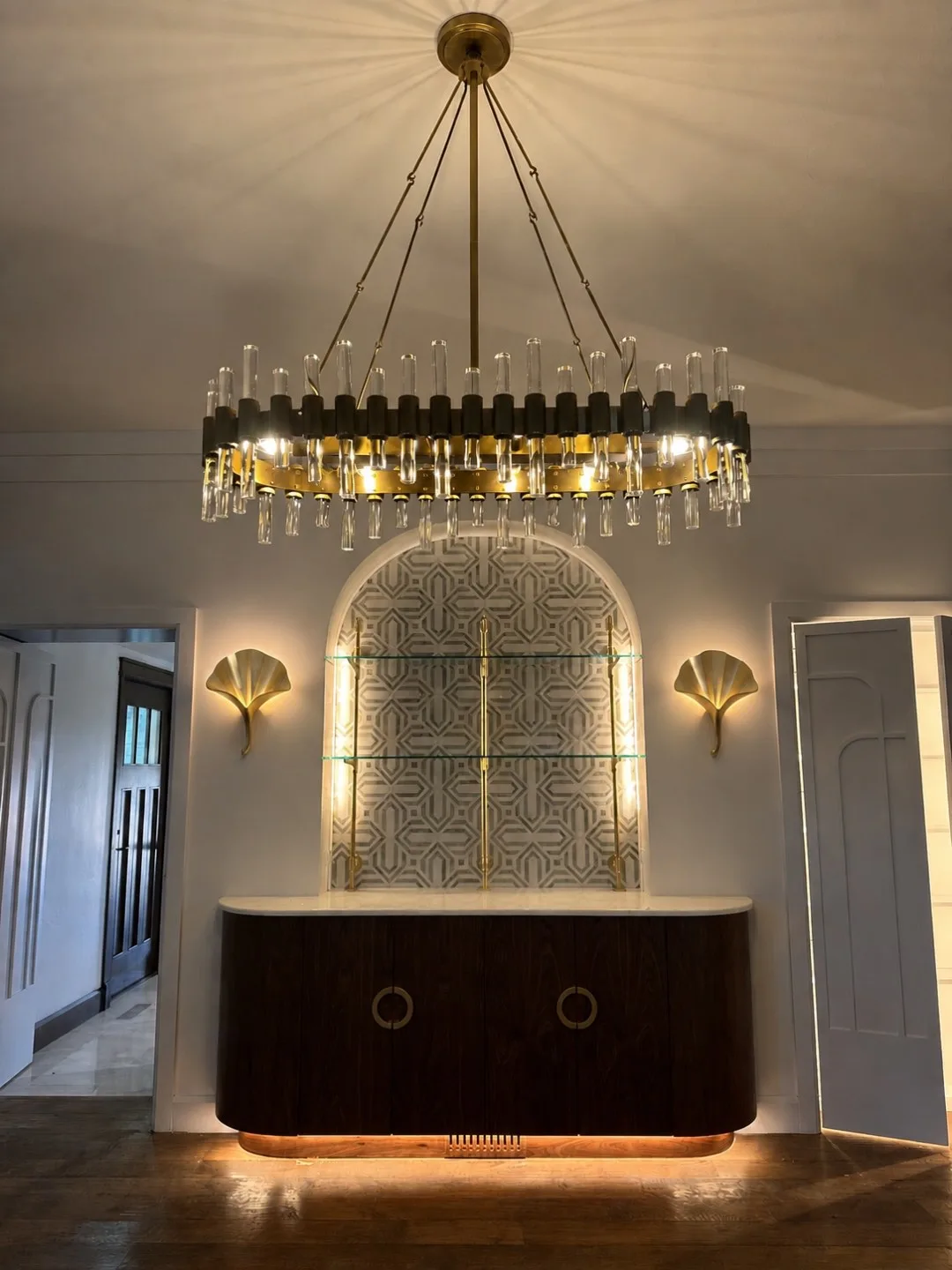
Custom chandelier and bar lighting installation in an Oklahoma City home
Overview

What lighting installation and design actually involves.

Lighting installation and design in Oklahoma City covers two things that usually get treated as one. There is the physical work - hanging a chandelier, cutting in recessed housings, running under-cabinet lighting, adding a switch leg where there has never been one. And there is the plan behind it: deciding where light needs to land, how much of it, at what color temperature, and on which switch. Do the first without the second and you end up with a bright room that still has a dark countertop.

Most of the residential lighting design work we do in OKC falls into three situations. A homeowner is remodeling a kitchen or finishing a room and the walls are open. Someone bought a house full of builder-grade fixtures and wants the entry, dining room, and primary bath to look intentional. Or a chandelier arrived from an online order and there is no box in the ceiling that will hold it. All three are lighting projects, but they need different amounts of design up front.

It matters because light is the one thing in a room you notice constantly and rarely think about. Recessed lighting installation spaced on an even grid puts your own shadow on the cutting board. A single overhead fixture flattens a living room that has a fireplace worth looking at. Layering ambient, task, and accent light - and putting each layer on its own control - is the difference between a room that works at 7pm and one you only use during the day.

Benefits

What you get that a fixture swap does not give you.

1

Light that lands where you work, not where the ceiling is symmetrical

Can lights spaced evenly across a kitchen ceiling put you between the light and the counter. We pull the layout forward over the island, the sink, and the range so the work surface is lit from in front of you instead of behind.

2

Heavy fixtures on boxes rated to hold them

A large chandelier can weigh more than a standard ceiling box is ever rated to carry, and sloped or high ceilings add their own hardware requirements. We set a rated box with proper bracing, so a fixture you paid real money for is not hanging on a box meant for a flush mount.

3

Dimming that holds steady instead of flickering

LED fixtures and older dimmers argue with each other - you get flicker at low levels, a buzz you can hear from the couch, or bulbs that drop out entirely. We match the dimmer to the drivers in your fixtures and test the full range before we leave.

4

One switching plan for the whole room

Layered lighting is only useful if you can control the layers. We put ambient, task, and accent on separate controls, add three-ways so a room can be switched from either doorway, and group the switches where you actually walk in - not wherever the wire happened to land.

Signs you need this

How to know it is time to call about lighting.

Lighting problems rarely announce themselves. They show up as rooms you avoid at night or lamps you keep adding. A few of the ones we hear most:

  • You cook in your own shadow because the ceiling lights are all behind you.
  • A room stays dim no matter how many lamps you plug in, and every outlet has one.
  • You bought a chandelier and there is no fixture box at the spot you want it - or the box that is there clearly will not hold the weight.
  • Your lights flicker, buzz, or drop out at the bottom of the dimmer range after you switched to LED bulbs.
  • One switch controls an entire open-concept living and dining space, so it is all on or all off.
  • The fixtures are the ones the builder installed and every room has the same one.
  • You are mid-remodel with open walls or an open ceiling, which is the least expensive moment this project will ever have.
  • A dining chandelier hangs too high or too low and the room never quite looks right.
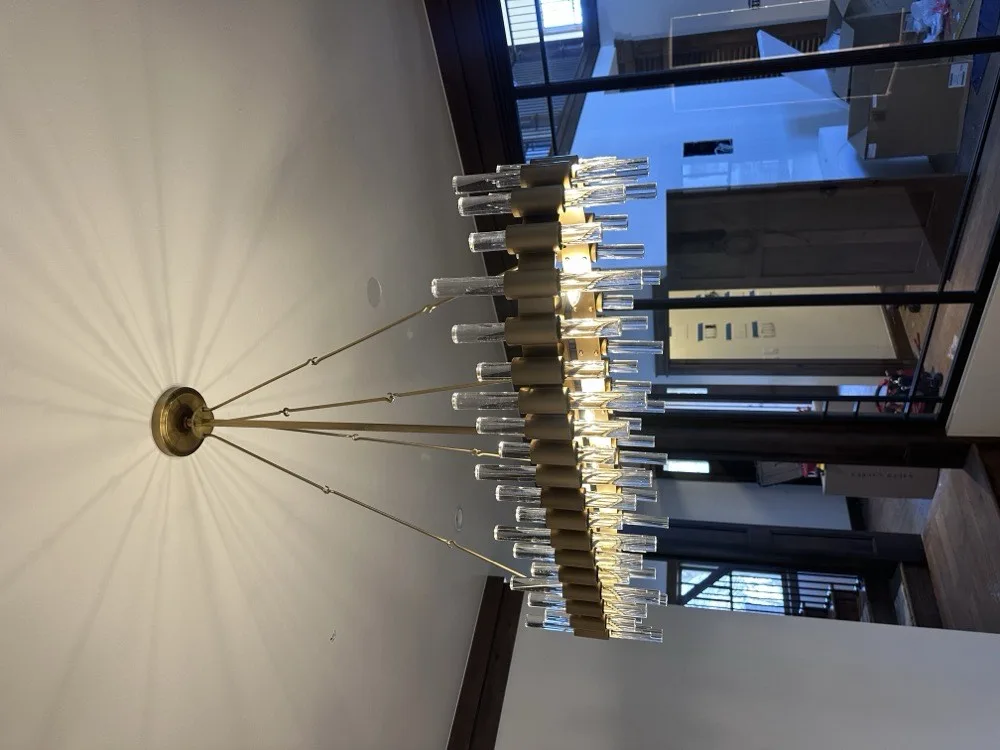
Crystal drop chandelier installation in an Oklahoma City home
Pricing guidance

What actually drives the cost of a lighting project.

Two lighting jobs with the same fixture count can price out very differently - here's what actually moves the number:

  • Whether the circuit already exists. Swapping a fixture onto a live box is quick, while creating a new location means a circuit or switch leg has to get there. If a room is already loaded up, new lighting may also need its own circuit run back to the panel.
  • Access to the ceiling you're working in. Recessed lighting during a remodel with open framing is straightforward. The same cans in a finished ceiling with living space above means fishing wire, working around insulation and framing, and sometimes patching - and a two-story foyer or vaulted great room needs lift equipment and more hands than an eight-foot ceiling.
  • Fixture weight and mounting. Large chandeliers, sloped-ceiling adapters, and long downrods need rated boxes and bracing that a flush mount does not.
  • How much switching you are adding. New three-way runs, separated zones, and dimmers each add wire and devices.

Your initial consultation is free, and you approve a custom plan with pricing before anything is scheduled. Larger lighting projects can also be financed on approved credit through our financing partner.

FAQ

Lighting questions we get asked most.

Can you install a chandelier where there is no light fixture now?

Usually, yes. It means running a new circuit or switch leg to that spot and setting a box rated for the fixture's weight. How involved that is depends on access - an attic or an open floor above makes it straightforward, while a finished ceiling with living space above takes more fishing and sometimes a small drywall patch. We look at access first and tell you what it will take before you commit.

Will you install a fixture I bought myself?

Yes, and most of our lighting work is homeowner-supplied fixtures. Two things help: have the fixture on site and unboxed before install day, and send us the specs ahead of time. Weight, mounting style, and whether the fixture is dimmable determine what box and dimmer we need to bring, and finding that out on the ladder wastes your time and ours.

How many recessed lights does a room need?

There is no single rule that works. Ceiling height, room dimensions, wall color, trim style, and the beam angle of the light all change the answer, and a kitchen with work surfaces needs a different layout than a living room. We lay the spacing out on paper for your specific room rather than defaulting to a grid, because an evenly spaced grid is what causes shadows over countertops.

Why do my LED lights flicker or hum on a dimmer?

Almost always a mismatch. Older dimmers were built for incandescent bulbs and expect a minimum load that LEDs never reach, so the dimmer never settles and you see flicker or hear a buzz. Mixing bulb brands on one circuit causes it too. The fix is a dimmer rated for LED loads, matched to the drivers in your fixtures.

Can you add lighting without tearing up my ceiling?

Often, yes. With attic access above the room we can usually place new cans and run switch legs with no visible damage. Ceilings with living space above sometimes need small access holes that get patched. We will tell you honestly which situation you are in before the first hole gets cut, not after.

How high should a dining room chandelier hang?

The common starting point is roughly 30 to 36 inches above the tabletop for an eight-foot ceiling, raised a few inches for every additional foot of ceiling height. Fixture size and shape matter too - a wide drum shade reads lower than an open frame at the same height. We hang it, look at it with you, and adjust the chain or downrod before we button it up.

Ready to plan your lighting?

If you are mid-remodel, the window for recessed lighting and new switch legs closes the day the drywall goes up. Call before insulation and rock, and the same layout costs a fraction of what it does through a finished ceiling.

We will walk the rooms with you, put the plan in writing, and stand behind the work after we leave. From the first call to the final walkthrough - Grider always makes it right. Grider Electric is licensed and insured, based in north Oklahoma City, and works on homes and new construction only - serving Oklahoma City, Edmond, Arcadia, Guthrie, Yukon, Moore, Norman, Mustang, Piedmont, Bethany, The Village, Nichols Hills, and the Deer Creek area.

← All services