4.9 on Google (405) 242-3342 Request Service
Residential Electrical Service

Landscape & outdoor lighting for Oklahoma City homes.

Low-voltage path and uplighting through the beds, wall and soffit fixtures on the house, light on the deck and patio, and weatherproof outlets and controls that hold up outside year-round.

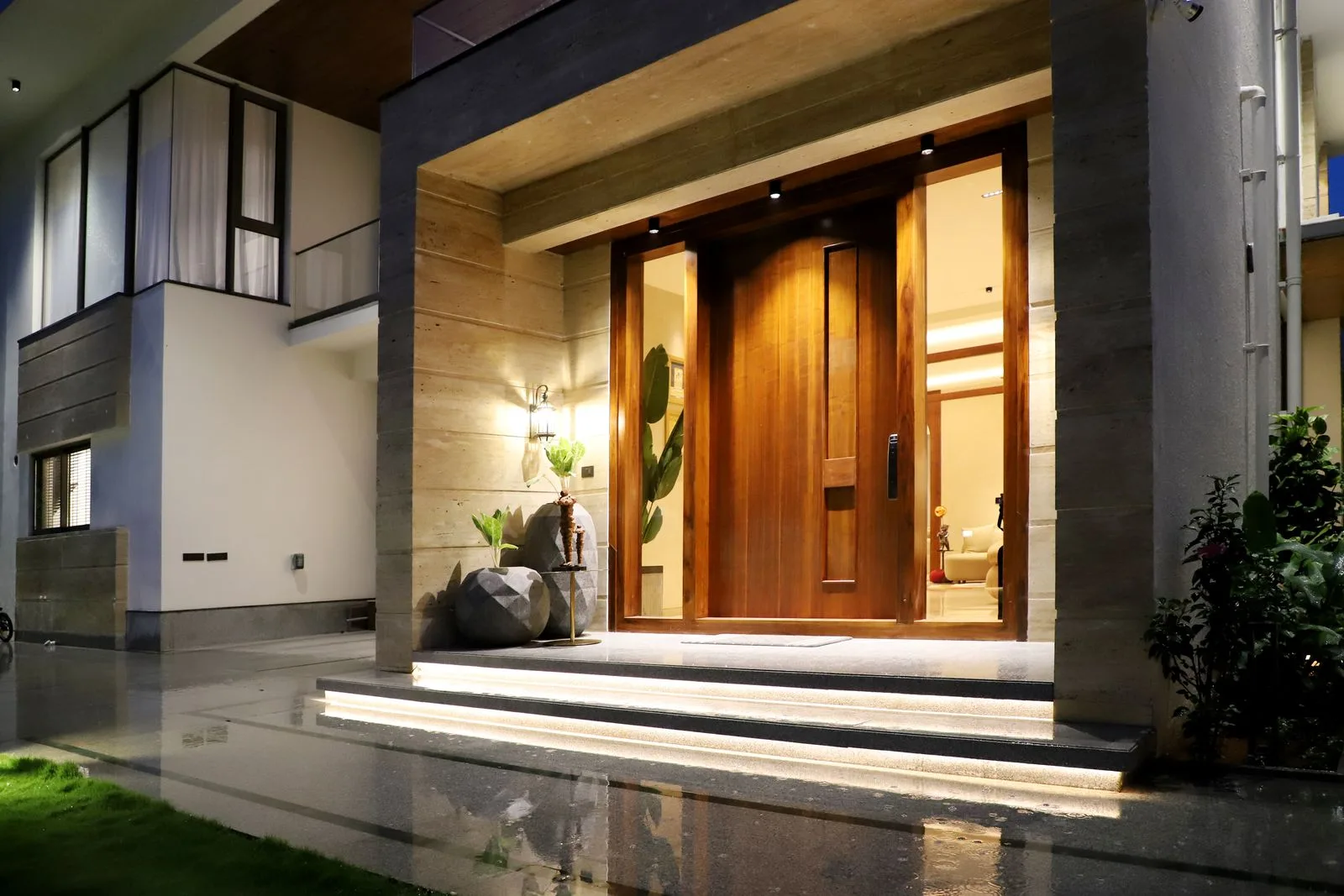
Modern home entry lit at night with an exterior wall lantern and illuminated entry steps
Overview

Two systems working the same yard.

Outdoor lighting is really two systems installed together. The first is low-voltage: a transformer mounted on the house steps power down to around 12 volts and feeds buried cable out to path lights along the walk, uplights on the trees and the front elevation, hardscape lights tucked under a wall cap, and step lights on grade changes. The second is line-voltage - the wall sconces flanking the door, soffit downlights washing the driveway, and floodlights covering the side yard and the back gate.

Getting either one right is mostly about what's underneath. Low-voltage systems fail in predictable ways: cable too small for the run, so the far fixtures come up dim; every light daisy-chained onto one leg; a transformer sized to the fixture count on the box instead of the actual load; connections twisted and taped instead of properly waterproofed. Line-voltage exterior work fails differently - receptacles without in-use covers, cable buried too shallow, fixtures that were never rated for a wet location sitting where the rain hits them.

We plan the whole exterior at once: what needs to be lit for footing and safety, what's worth lighting because it looks good at night, where the outlets need to be for string lights or holiday displays, and how the whole thing turns itself on and off. Then we install it so Oklahoma weather doesn't take it apart over two seasons.

Benefits

What good exterior lighting actually does.

1

Safe footing from the driveway to the door

Steps, grade changes, and a walk that bends around a bed are where people trip in the dark. Low path lights and step lights put light on the surface itself instead of into your guests' eyes, so the route reads clearly from the car.

2

Security light that's aimed, not just bright

A single glaring floodlight makes deep shadows right next to it and blinds anyone looking that way. Soffit downlights and properly aimed fixtures cover the side yard, the gate, and the back of the house evenly - without lighting your neighbor's bedroom window.

3

An outdoor system built for outdoors

Wet-rated fixtures, waterproof connections, correctly sized buried cable, GFCI protection, and in-use covers on the receptacles. That's the difference between a system that's still working in five years and one that starts dropping fixtures after two winters.

4

Lighting that runs itself

A photocell or astronomic timer brings the yard up at dusk and shuts it down when you want, adjusting through the year as sunset moves. Nobody has to remember the switch by the back door, and the house is never dark when you pull in.

Signs you need this

When it's time to light the outside.

Some of these are new installations, some are repairs to a system that's already there:

  • Guests use their phone flashlights to find the front door
  • Steps, a retaining wall, or a change in grade sits completely unlit
  • Landscape lights at the far end of the run glow dim and orange
  • Fixtures are fogged over, corroded, or filled with water
  • Sections of the system go out after heavy rain or a hard freeze
  • The transformer hums loudly, gets hot, or keeps tripping
  • The timer forgets its schedule after every power blip
  • One harsh floodlight is doing all the work and glaring into windows
  • Extension cords run out a window or across the patio for string lights
  • An outdoor receptacle has a flat cover that won't close over a plug, or no GFCI protection
  • You added a deck, patio, pergola, or outdoor kitchen and there's no light or power out there
  • The house disappears from the street at night and the address can't be read

If an exterior fixture or outlet is sparking, or a buried cable has been cut by digging, shut that circuit off and call us before using it again.

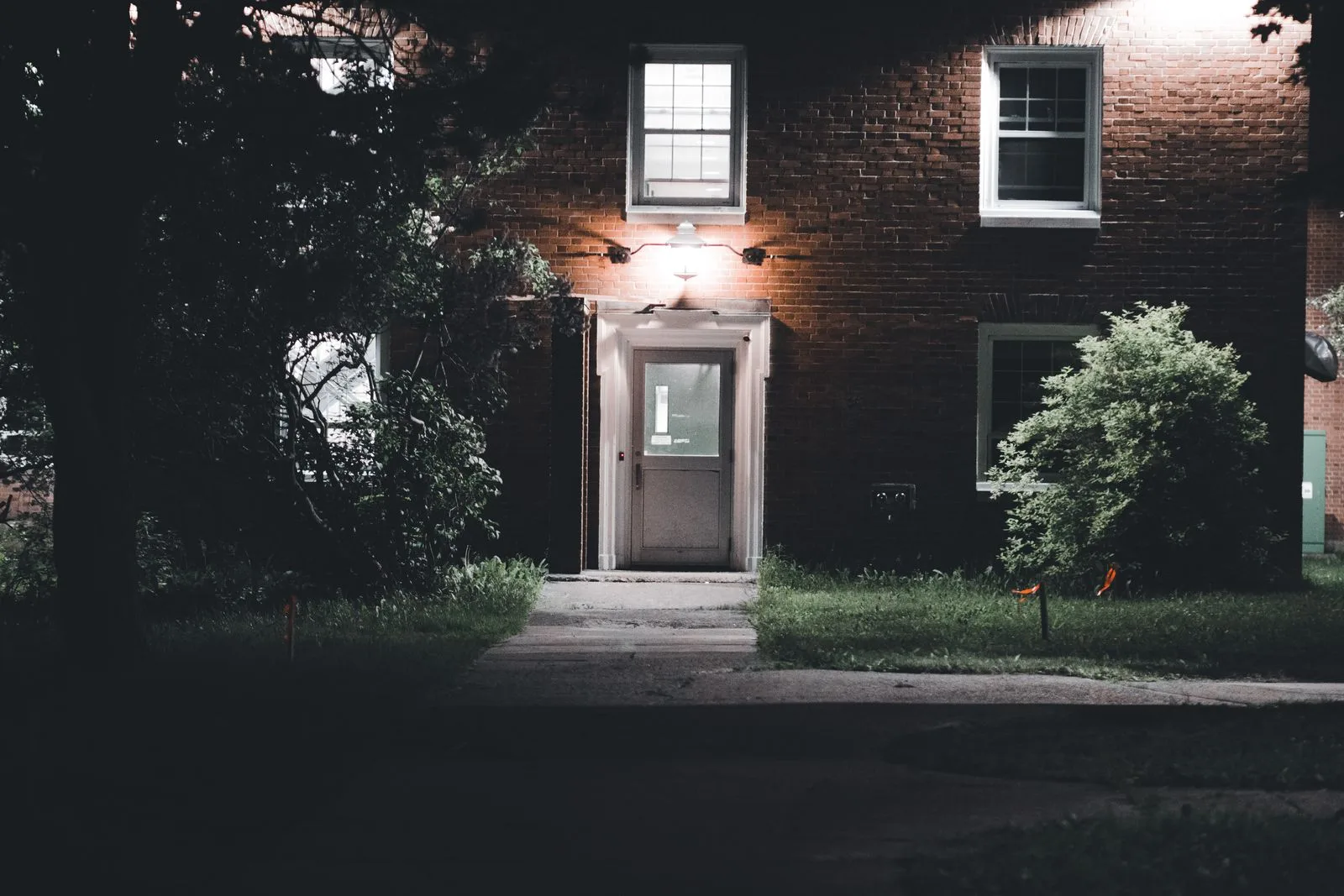
Brick home entrance lit by an exterior wall lantern at night
Pricing guidance

What drives the cost of an outdoor lighting project.

Outdoor lighting scales with the property, not with a fixed package. Here's what genuinely moves the cost:

  • How many fixtures, and how far apart. Fixture count drives transformer sizing and wire gauge together. A dozen lights spread across a large lot is a different system than a dozen packed along one front walk.
  • Trenching, obstacles, and access. Running through open beds is quick, but crossing sod, mature root systems, a driveway, or a sidewalk means slit-trenching, boring, or sleeving - and that's where the labor concentrates. Soffit fixtures and second-story mounts add ladders or lifts regardless of how simple the wiring is.
  • Low-voltage versus line-voltage runs. Landscape cable is buried shallow and terminated at fixtures. Anything at household voltage - soffit lights, patio circuits, a receptacle out by the pergola - needs deeper burial or conduit and appropriate protection.
  • What's already out there. If an exterior circuit has capacity and a place to tie in, the job stays outside; if a new circuit has to come off the panel, that adds work at the panel end. An underperforming existing system sometimes just needs a correctly sized transformer and reworked runs rather than replacement, and that's a smaller job.
  • Fixture quality and controls. Cast brass and copper cost more up front and last years longer in beds and near irrigation than composite housings, which fog and crack in the Oklahoma sun - we'll tell you honestly where that upgrade earns it back. A basic photocell is simple; astronomic timers, multiple zones on separate schedules, or app and smart-home control each add hardware and setup.

Your consultation is free, and you'll get a firm price in writing before we schedule anything. We also partner with Wisetack for financing on approved credit. See financing details.

FAQ

Outdoor lighting questions we hear most.

What is the difference between low-voltage landscape lighting and regular outdoor lighting?

Low-voltage landscape lighting runs off a transformer that steps household power down to around 12 volts, then feeds path lights, uplights, and step lights over cable buried shallowly through the beds. It is the right tool for anything out in the yard. Exterior wall sconces, soffit downlights, and floodlights on the house run at full household voltage on a properly protected circuit. Most homes end up with both, and the two systems get designed together.

Do the wires have to be buried, and will you tear up my yard?

Yes, the cable gets buried - at the depth its type calls for, which is shallow for low-voltage landscape cable and considerably deeper for anything at household voltage. In planted beds that is usually a hand trench with almost no trace afterward. Across sod we cut a narrow slit and close it back up. Driveways and sidewalks are the exception: those are bored or sleeved, and we point them out on the plan before the work starts so nothing is a surprise.

Why do the lights at the far end of my system look dim?

That is voltage drop, and it is the most common flaw in landscape lighting installed without a plan. Low-voltage cable loses voltage over distance, so a long run of fixtures daisy-chained on undersized wire leaves the last ones noticeably weaker and shortens their lamp life. The fix is correct wire gauge, splitting the system into multiple runs off the transformer, and sizing the transformer for the actual load rather than the fixture count on the box.

Do outdoor outlets need GFCI protection?

Yes. Receptacles in outdoor locations require ground-fault protection, and they need a weatherproof in-use cover that keeps water out while something is plugged in - not the flat snap-shut cover that only seals when the outlet is empty. If you are running extension cords out a window or across a patio for string lights or holiday displays, a properly protected exterior receptacle is the fix, and it is a small job.

Can the outdoor lights turn themselves on and off?

They should. A photocell brings the lights up at dusk automatically. An astronomic timer goes further, tracking sunset through the year so the on time shifts with the season and you can set your own off time - midnight, or whenever you are done with the yard. Smart controls add app and schedule control on top of that. Whatever we install, you should not be flipping a switch by the back door every night.

Will outdoor lighting hold up to Oklahoma weather?

It will if the parts are chosen for it. Our weather runs the whole range - hail, ice, hard freezes, and long stretches of heat - so fixtures need to be rated for wet locations, connections need real waterproof splices rather than tape, and the transformer belongs on a wall in a spot that drains and stays clear. Cast brass and copper fixtures hold up longest in beds and near irrigation. Cheap composite housings in the sun are what fog over and crack after a couple of seasons.

Related services

Often done alongside outdoor lighting.

Get it lit before the evenings get short.

Outdoor lighting is the one project everybody thinks about in November and wishes they'd handled in August. Sunset comes earlier every week through the fall, and the same walk that felt fine at eight o'clock in the summer is dark by the time you get home. Trenching also goes easier in workable ground than in a hard freeze - and the yard has time to settle back before you're hosting anyone.

Call and talk to a real person, get a free consultation and a firm written price, and know that if anything isn't right after we leave, Grider always makes it right. Grider Electric is licensed and insured, based in north Oklahoma City, and works on homes and new construction only - serving Oklahoma City, Edmond, Arcadia, Guthrie, Yukon, Moore, Norman, Mustang, Piedmont, Bethany, The Village, Nichols Hills, and the Deer Creek area.

← All services