4.9 on Google (405) 242-3342 Request Service
Residential Electrical Service

Electrical troubleshooting & repairs in Oklahoma City.

Flickering lights, dead outlets, breakers that won't stay set, a buzz behind the wall - we find what's actually causing it and repair it, instead of guessing at parts until the symptom goes quiet.

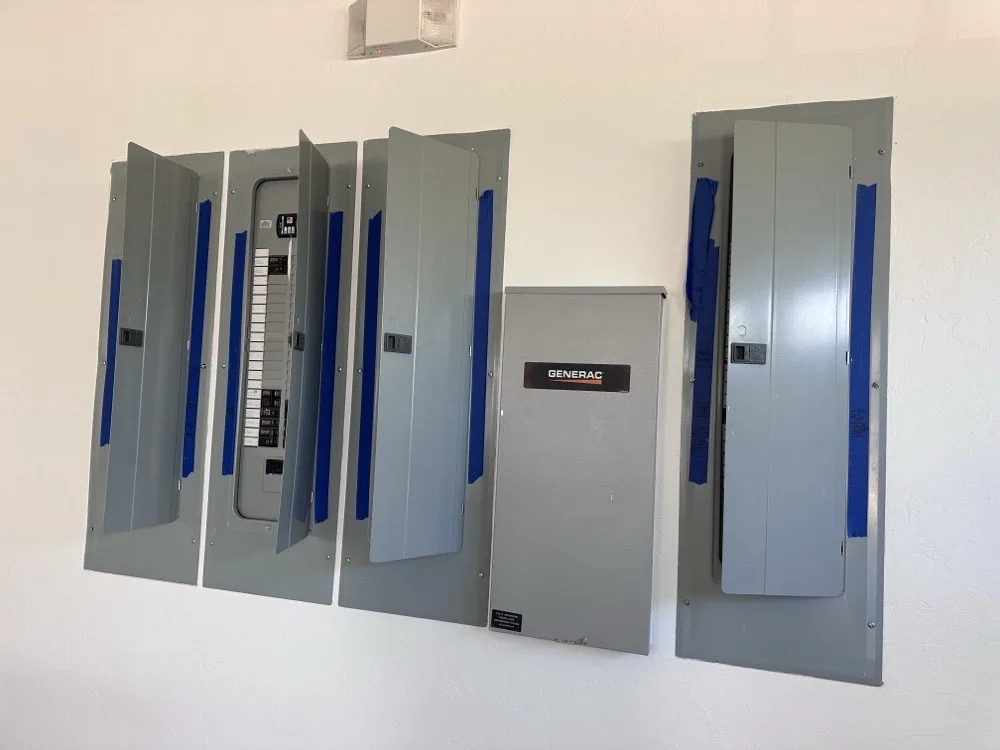
Electrical panel bank installation in an Oklahoma City home
Overview

Finding the cause, not just the symptom.

Electrical troubleshooting is diagnostic work. The thing you notice - a dead receptacle, a light that flickers when the dryer runs, a breaker that trips every third evening - is the end of a chain, and the fault is usually somewhere upstream of it. So the job is tracing that chain: mapping which devices share the circuit, testing under load rather than at rest, checking voltage drop, and reading terminations at every box along the run until the readings stop making sense in one particular place.

That's a different job from replacing the part you can see. Swapping a receptacle that reads dead does nothing if the failed connection is at the receptacle feeding it. Putting in a new breaker doesn't help if the circuit is genuinely overloaded or a neutral is shared where it shouldn't be. We've been called out plenty of times to homes where three devices had already been replaced and the original fault was still sitting in a junction box in the attic.

A large share of what we find was left behind by someone else - a previous owner's weekend project, a remodel where the drywall went up before anyone looked at the wiring, a handyman who tapped a lighting circuit for a new outlet. We correct that work to code and show you what was there. Nobody gets a lecture about a decision they didn't make.

Benefits

What a real diagnosis gets you.

1

The problem stops coming back

Symptoms that return after a repair usually mean the original fault was never found. When the cause is identified and corrected at the source, the circuit stops misbehaving - and you stop paying for the same visit twice.

2

Someone else's shortcuts get corrected

Back-stabbed connections, buried junction boxes, missing grounds, outdoor runs in indoor cable, neutrals shared between circuits. We find this work regularly, and we bring it up to code rather than reconnecting it the way we found it.

3

A hidden fire risk found early

Loose terminations and damaged insulation generate heat long before anything visible happens. Chasing down a flicker or a warm switch plate frequently turns up a connection that was quietly on its way to a real problem.

4

You find out what you don't need

One bad splice is a repair, not a rewire, and one tripping breaker doesn't mean the panel is done. We'll tell you when the fix is small, and we'll tell you just as plainly when the wiring pattern says the trouble is bigger than one circuit.

Signs you need this

Call us if you're seeing any of this.

These are the symptoms that bring most repair calls in, and none of them resolve themselves:

  • Lights flicker or dim when an appliance kicks on
  • An outlet or a whole row of outlets is dead with no breaker tripped
  • A breaker trips repeatedly, or won't reset at all
  • A GFCI won't stay reset, or trips every time it rains
  • A switch plate, outlet, or cover feels warm to the touch
  • You hear buzzing, sizzling, or crackling from a switch, outlet, or fixture
  • Bulbs in one fixture burn out far faster than anywhere else
  • You feel a slight shock or tingle from an appliance or a metal fixture
  • A plug falls out of the receptacle or the outlet is loose in the wall
  • Half a room stopped working after a storm or after remodeling work
  • Two-prong outlets, cloth-covered wiring, or splices with no box behind them

If you smell burning plastic or see sparking, shut off that breaker - or the main if you can't tell which one - and call us before using the circuit again.

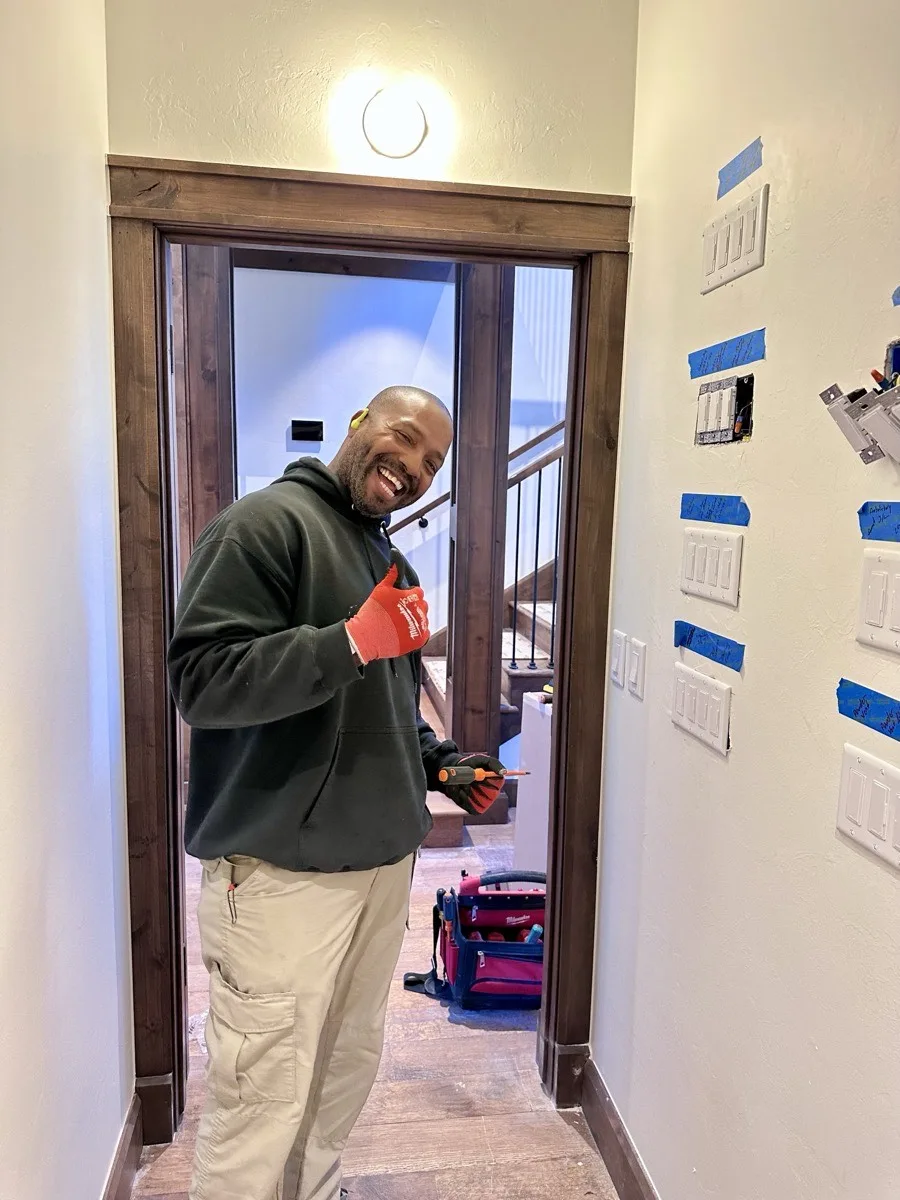
Ka'ron, journeyman electrician at Grider Electric, on a job in Arcadia, OK
Pricing guidance

What drives the cost of a repair call.

Repair work is harder to price sight-unseen than an installation, because the diagnosis is part of the job.

  • How long the fault takes to find. A dead outlet on a clearly labeled circuit is quick, while a fault spread over three rooms on wiring that's been modified twice is tracing work - and tracing is the bulk of the time. An intermittent fault adds to that, because one that appears only under certain conditions has to be recreated before it can be measured.
  • Access to the wiring. An accessible attic or unfinished basement is straightforward. Runs behind finished walls, above insulation, or under a slab take longer and sometimes mean patching afterward.
  • What we find when we open it up. Replacing one failed device is a small repair; a junction with four bad splices, a damaged cable, or a circuit that was never wired correctly is a different scope. Homes that have gone years without electrical attention often have several unrelated faults, so we prioritize by safety, tell you before we go further, and let you decide what's handled now.
  • Code corrections and permitting. Missing grounds, an outlet that now requires GFCI or AFCI protection, or an outdoor circuit run in the wrong cable all change what a correct repair includes. Small repairs usually don't need a permit, but once new circuits or replaced wiring enter the scope, permitting and inspection may apply, and requirements differ across the metro's municipalities.

You'll hear what we found and what the repair costs before we do it, and nothing gets added mid-job without your say-so. We also partner with Wisetack for financing on approved credit. See financing details.

FAQ

Repair questions we hear most.

Why does my breaker keep tripping?

A breaker trips for one of three reasons: the circuit is carrying more load than it is rated for, two conductors are touching that should not be, or current is leaking to ground. Those have very different fixes, and the testing tells us which one you have. Replacing the breaker without answering that question is how a real problem gets hidden behind new hardware.

Can you find the problem if it only happens sometimes?

Usually, yes. Intermittent faults are almost always a connection that changes with heat, vibration, or load, so we recreate the conditions instead of waiting for luck. That means loading the circuit, working the switches and receptacles, checking voltage drop under load, and inspecting terminations along the run. Tell us when it happens and what else is running at the time - that detail shortens the search considerably.

Does one bad circuit mean my whole house needs rewiring?

Most of the time, no. A single failed splice, a damaged receptacle, or one back-stabbed connection is a repair, not a rewire. What we look at is whether the rest of the wiring shows the same pattern of trouble. If it does, we will say so plainly and show you what we found. If it does not, we fix the circuit and leave the rest alone.

What should I do if I smell burning or see sparks?

Shut off the breaker for that area if you can reach it safely, or the main if you cannot tell which one it is, and call us. Do not keep using the circuit to see whether it happens again. A burning smell means something is already hot enough to damage insulation, and that condition does not improve on its own.

Will you fix wiring a previous owner or another contractor did?

Yes, and a good share of our repair work is exactly that. Buried junction boxes, receptacles fed from lighting circuits, missing grounds, wire nuts left loose above a ceiling, an outdoor circuit run in indoor cable - we find that work regularly. We correct it to code, tell you what was wrong, and do not lecture you about a decision you did not make.

How long does electrical troubleshooting take?

A dead outlet or a single tripping circuit is often diagnosed and repaired in one visit. Faults spread across several rooms, or wiring that has been modified over the years, take longer because the tracing itself is the work. We tell you what we have found and what the repair involves before we keep going, so you are deciding with real information.

Related services

Where a repair call sometimes leads.

Something not working right? Let's find out why.

Electrical problems don't wear off. A loose termination gets hotter every time the circuit is used, damaged insulation keeps degrading, and the flicker you've learned to live with is the system telling you something is wrong. The symptoms people ignore longest - a warm outlet, an occasional trip, a light that stutters - are the ones worth looking at soonest.

Call and talk to a real person, get a straight diagnosis and the repair price before we do the work, and know that if anything isn't right after we leave, Grider always makes it right. Grider Electric is licensed and insured, based in north Oklahoma City, and works on homes and new construction only - serving Oklahoma City, Edmond, Arcadia, Guthrie, Yukon, Moore, Norman, Mustang, Piedmont, Bethany, The Village, Nichols Hills, and the Deer Creek area.

← All services