Overview
What a standby generator actually does.
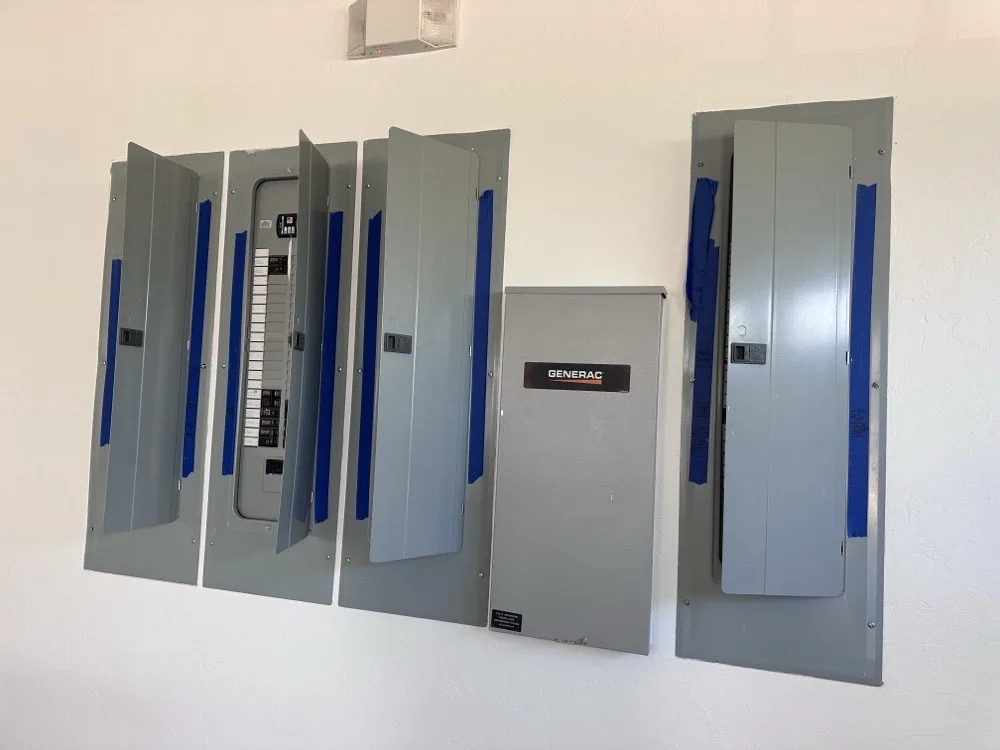
A whole-house generator is a permanent unit that sits outside on a pad, runs on the natural gas or propane already serving your home, and starts on its own the moment utility power drops. It connects to your electrical system through an automatic transfer switch, which safely disconnects you from the grid and feeds the house from the generator instead. That last part is what separates whole-house generator installation in Oklahoma City from dragging a portable unit out of the shed - there are no extension cords running under a door, no refueling at two in the morning, and no risk of backfeeding the line while a utility crew is working on it.
Homes in central Oklahoma have real reasons to want backup power. Ice loading in January, straight-line winds in spring, and summer storms all take down distribution lines, and rural and semi-rural properties around Guthrie, Piedmont, and the Deer Creek area are often the last to come back. If your home is on a well, an outage means no water at all. If you have a sump pump, the rain that knocked the power out is the same rain filling the pit.
It is worth understanding that standby generator installation is an electrical project first and an equipment purchase second. The unit on the pad is only as good as the load calculation behind it, the transfer switch in front of it, and the grounding and bonding underneath it. That is the part we handle, and the part that determines whether your home backup generator works the way you expected the first time you need it.