4.9 on Google (405) 242-3342 Request Service
Residential Electrical Service

Pool & spa electrical for Oklahoma City homes.

Dedicated circuits, code-required bonding, and GFCI protection for pools and hot tubs - done right the first time, because water and electricity leave no room for shortcuts.

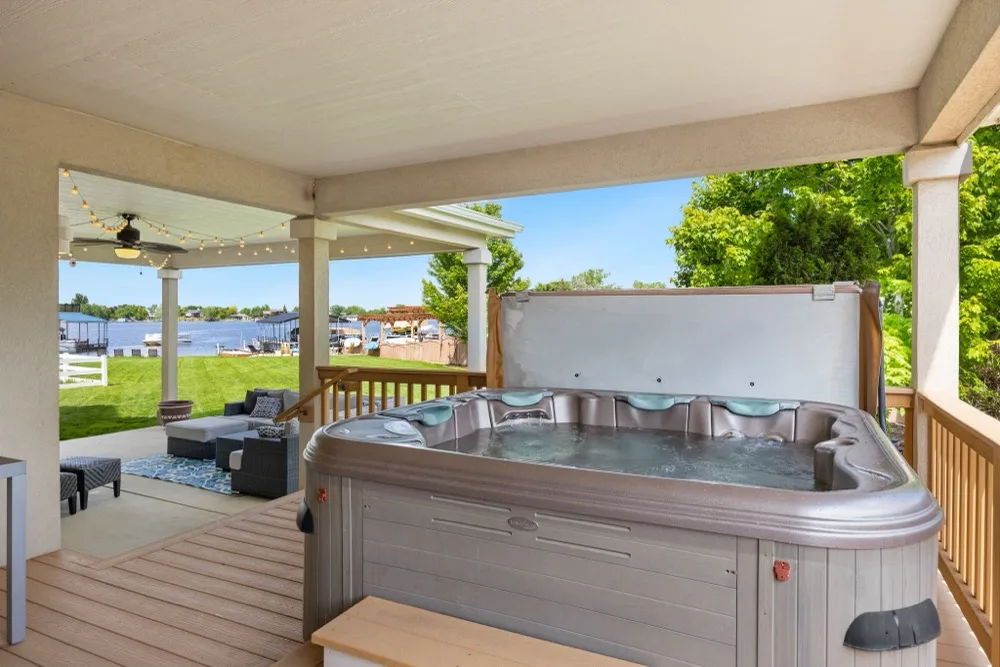
Hot tub on a covered backyard deck overlooking a lake
Overview

What pool and spa electrical work actually covers.

Pool and hot tub electrical is its own discipline. A backyard spa or an in-ground pool needs a dedicated circuit sized to the equipment nameplate, a GFCI device protecting it, a disconnecting means placed where code requires it relative to the water, and - the part homeowners rarely hear about until we bring it up - a bonding system that ties every conductive part of the pool area together.

Most of the calls we take here are one of three jobs. A hot tub is being delivered to a patio or deck and needs a 240 volt circuit run, a GFCI spa panel set, and the tub bonded. A pool is being built and the equipment pad needs power for the pump, heater, salt cell, lights, and automation, with the bonding grid installed before concrete goes down. Or an existing pool is getting new equipment and the wiring underneath it turns out to be older than the equipment it feeds.

We treat this category with more weight than most residential work, and we will say why plainly: the shock hazard around water is not theoretical. A person standing in a pool is barefoot, wet, and in contact with a large conductive surface, which removes nearly every margin the human body normally has. That is the entire reason the code devotes a whole article to pools, spas, and fountains, and it is why we do not cut a corner on this job even when a shortcut would be faster and cheaper for everyone involved.

Benefits

What doing this correctly buys you.

1

Bonding that keeps voltage differences off your skin

A proper equipotential bond ties the shell, water, perimeter surface, rails, pump, and heater together so there is no voltage difference between the ladder you're holding and the water you're standing in. That "tingle" people describe in older pools is exactly what bonding exists to eliminate, and it is the part of this job most often skipped by whoever wired it cheapest.

2

GFCI protection sized and set for the equipment

Ground-fault protection around water is what interrupts a fault in milliseconds instead of letting it find a path through a swimmer. We install the right device for the load rather than the cheapest one that fits, land it where you can actually reach it, and test it in front of you before we leave.

3

Equipment that gets the voltage it was built for

Pool pads and spas are usually the longest run on the property. Undersize that conductor and the heater and pump live on low voltage forever - running hot, drawing more current, and failing early. We size for the distance, not just the breaker, so your equipment gets what its nameplate asks for.

4

One trade that talks to your builder or dealer

Pool and spa projects go sideways at the handoffs - the deck gets poured before the bond goes in, or a tub is delivered to a patio with no circuit. We coordinate directly with your pool builder or hot tub dealer so the electrical lands at the right point in their sequence instead of after it.

Signs you need this

When to have your pool or spa wiring looked at.

Call us if any of these sound like your backyard:

  • You've bought a hot tub and have no idea whether your panel can carry it
  • A spa is running on an extension cord, a shared circuit, or a receptacle someone added "just for now"
  • Anyone has felt a tingle, a buzz, or a shock touching the water, a rail, a ladder, or a wet deck
  • The GFCI trips whenever the heater or the pump starts - or worse, it won't reset at all
  • An underwater light has gone dark, flickers, or fills with water
  • The pool is older and nobody can tell you whether a bonding grid was ever installed
  • The equipment pad has rusted conduit, cracked whips, or connections sitting in standing water
  • Your disconnect isn't within sight of the equipment, or there isn't one
  • You're adding a heater, a salt system, automation, or pool lighting to an existing pool
  • You're re-decking, re-plastering, or remodeling the pool area - the right moment to correct what's buried

If anyone has felt a shock in or around the water, keep everyone out of the pool or spa, shut the equipment circuit off at the panel if you can do it safely, and call us right away. That symptom is not something to swim around for a few more weekends.

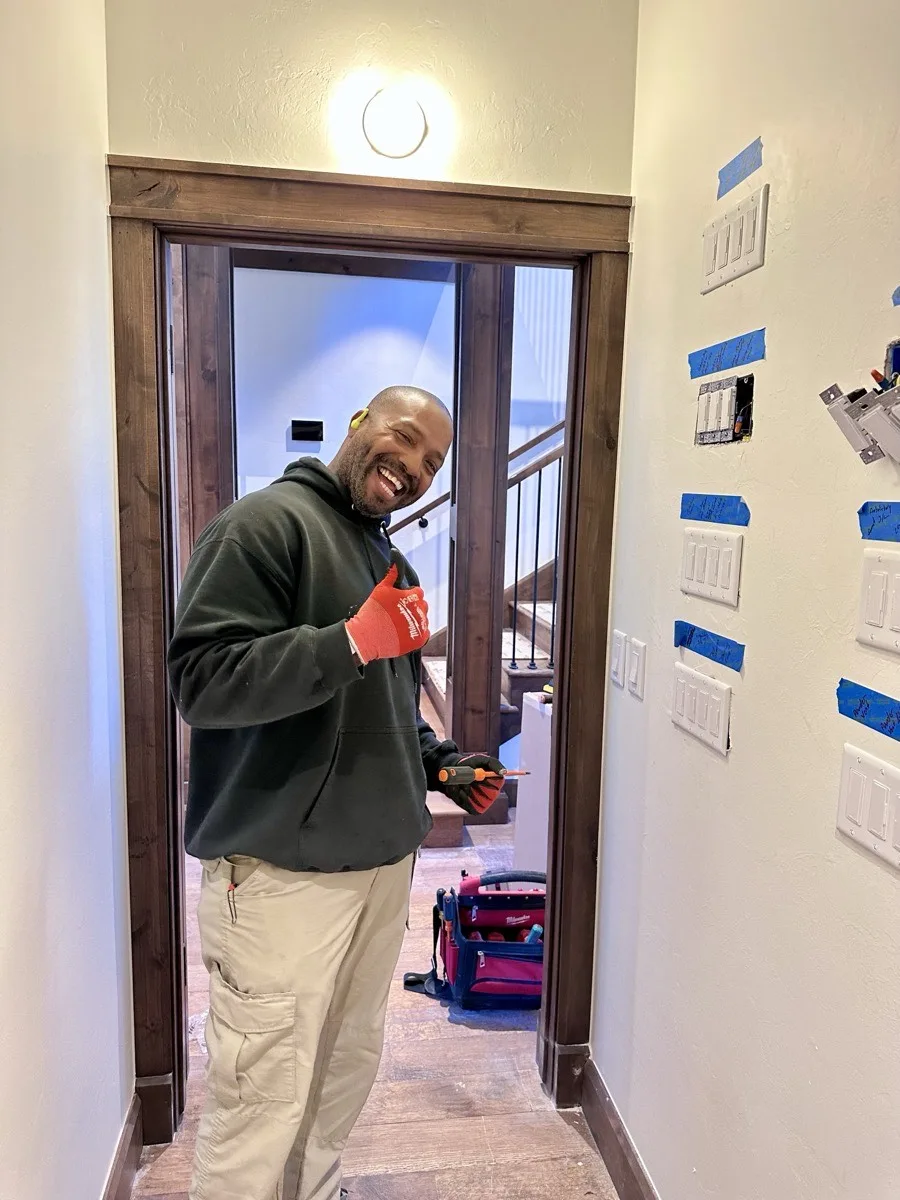
Ka'ron, journeyman electrician at Grider Electric, on a job in Arcadia, OK
Pricing guidance

What drives the cost of pool and spa wiring.

Backyards vary more than houses do, so here's what genuinely moves the number:

  • The run from your panel to the water. A spa on a patio twenty feet from the panel and an equipment pad at the back of a large lot are different jobs - longer runs mean heavier conductors to hold voltage, more conduit, and more labor. What the route crosses matters just as much: open turf is straightforward, while getting under a driveway, a stamped-concrete deck, mature landscaping, or a retaining wall is not, and restoring what we cross costs something too.
  • The equipment's demand and whether your service has room. A 120 volt plug-and-play spa, a 240 volt 50 amp tub, and a full pool pad with pump, heater, salt cell, lights, and automation sit at very different points on the scale. If the load calculation says the existing panel can't carry it, a panel upgrade becomes part of the project rather than a surprise halfway through.
  • New build versus retrofit bonding. Installing the bonding grid before the deck is poured is the cheap version. Correcting or proving bonding on an existing pool with everything already buried is the expensive version, and it's why we push to be involved early.
  • Lighting, niche work, and permits. Underwater lighting, transformer locations, and old wet niches add scope, especially on pools where the existing conduit can't be reused. Oklahoma City, Edmond, Norman, and the surrounding municipalities also each set their own permit fees and inspection schedules.

Your consultation is free, and you'll have a firm written price before we schedule anything. We also partner with Wisetack for financing on approved credit. See financing details.

FAQ

Pool and spa questions we hear most.

Can I plug my hot tub into a regular outlet?

Only if it is a plug-and-play model built for 120 volts, and even then it needs a GFCI-protected outlet on a circuit that is not shared with anything else. Most spas sold in the metro are 240 volt units that require their own dedicated circuit, a GFCI disconnect, and bonding. An extension cord is never an acceptable way to power a hot tub, no matter how short the run or how temporary the plan is.

What is pool bonding, and is it really required?

Bonding ties the pool shell, the water, the perimeter surface, ladders and rails, the pump and heater, and any nearby metal together with a heavy copper conductor so they all sit at the same electrical potential. It is not the same thing as grounding. It is required by the National Electrical Code, and it is the single measure that prevents the stray-voltage shocks people describe as a tingle in the water. We do not treat it as optional or negotiable.

Do you coordinate with my pool builder or hot tub dealer?

Yes, and it makes the job go better. We would rather talk to your pool builder before the deck is poured and to your spa dealer before the delivery date is set, because the bonding grid and the circuit both have to be in place at specific points in that sequence. Give us the equipment specification sheet and the delivery or excavation date and we will build our schedule around theirs.

Do I need a permit to wire a hot tub or pool in Oklahoma City?

Yes. A new dedicated circuit for a spa or pool equipment pad is permitted and inspected work in Oklahoma City and in the surrounding municipalities, and requirements differ from one to the next. We pull the permit, schedule the inspection, and handle that correspondence so you are not calling the city yourself.

How far ahead of my hot tub delivery should I call?

Call as soon as you have a model picked out, even before you have a delivery date. The wiring has to be finished and inspected before the spa can be filled and energized, and the timeline depends on the permit, the run from your panel, and whether your service has capacity. Homeowners who call the week of delivery are usually the ones sitting on a dry spa waiting on us.

My pool is decades old. Does it have to meet current bonding requirements?

Existing pools are not automatically required to be torn up and rebuilt to the current code edition. But when we replace equipment, add a heater or lighting, or rework the circuit, that work follows current code, and we will tell you honestly what we can and cannot verify about a bonding grid that was buried years ago. If we find no bond at all on an older pool, we will say so plainly and explain the options rather than energize it and walk away.

Related services

Often paired with pool and spa work.

Getting a pool or spa energized this season?

Bonding and ground-fault protection near water are not upgrades or line items to trim - they are the difference between a backyard that's safe barefoot and one that isn't. If your spa is on the delivery calendar or your pool build is heading toward a pour, call before the concrete goes down, not after.

Spring and early summer fill up fast here, and permits and inspections take time to line up. Call and talk to a real person, get a free consultation and a firm written price, and know that if anything isn't right after we leave, Grider always makes it right. Grider Electric is licensed and insured, based in north Oklahoma City, and works on homes and new construction only - serving Oklahoma City, Edmond, Arcadia, Guthrie, Yukon, Moore, Norman, Mustang, Piedmont, Bethany, The Village, Nichols Hills, and the Deer Creek area.

← All services